Yep. I did. I finished the short novel, Wild Wild Witch, that I have been posting as I go on Inkitt. Happy dance!
I have a lot of fun with this book. It's a fantasy/western/romance with a little bit of horror thrown in for good measure. I set out to write a romance, and then I was like, "Hey, why not try a little genre blending... I'll make a western, too." Then I thought, "What's a story without fantasy elements? I like fantasy stories the most, so I'd better make it a romance-western-fantasy." And then as I was writing the last chapters the horror just made sense.
This book taught me a few things about my writing.
1) I am incapable of writing anything simple.
2) I seem to be compulsive about things my character does going wrong, as opposed to having a lot of external obstacles get in their way. In my next story, I'm going to try not to do that. Not that I regret anything about this story--I think it all works very well and is entertaining. But I feel like if this is my pattern I have to try to push myself outside of it. It comes from an anxiety that introducing external obstacles will somehow feel contrived. I'm not sure where this anxiety comes from.
3) I want to work on creating more layered villains. My two major villains in this book are hate sinks. I realized as I was writing Witch that I really am not instinctively interested in my villains in and of themselves, other than as hate sinks. I am very interested in my protagonists and supporting characters, but on some level the fact that my villains are villains makes me dislike them and I don't want to spend much time on them other than to make them hate-worthy. Which isn't to say I've never written layered villains--I have. I think Reister is interesting (more so than Finnarun, who falls more into hate sink territory again) and I don't even really consider Liut a villain despite what he does. But I think they developed into interesting villains not because I planned them that way but because the story called for it, if that makes sense. With my next villain(s) I will take time to really plan and try to give them redeeming qualities that make them more complex.
Who are some of your favorite villains in novels, films, and TV? Are they hate sinks, or more complex?
Showing posts with label romance. Show all posts
Showing posts with label romance. Show all posts
Tuesday, April 16, 2019

Sunday, April 7, 2019
Inkitt: Publishing as You Go
I recently discovered Inkitt.com, which is, I gather, a lot like Wattpad. I've dabbled a little on Wattpad but never done very much. I decided to try out Inkitt a bit more thoroughly. Maybe it's the novel contest. I don't know. Does Wattpad have a novel contest? It's possible that everything I like about Inkitt is the same on Wattpad, I'm just not that familiar with that platform.
 In the past when I've written novels I've hit walls where I've reached out to a friend and asked that they read what I have done so far, not for feedback, but because knowing someone is reading my stuff is a better motivator for me to finish the book than anything else I've come across. I know it's sort of ass-backwards. You're supposed to finish the novel, revise it, polish it, revise it again, and then polish again, and then send it out into the world to find readers. I may get to the point where that feels right to me. I certainly have some ambivalence about not doing it that way. But right now the reason I'm enjoying myself on Inkitt is because I'm posting each chapter as I finish it, and they have these cool analytics that show you how many people are reading. I've got something in the neighborhood of ten people reading my incomplete novel right now. It's so great for motivation! I imagine that these people have all read the latest chapter (the analytics say so, actually) and are eagerly awaiting the next installment. So I feel that push to deliver.
I'm on Chapter 16 and I think there are only a couple more chapters to go. The story is definitely winding down; I'm just not sure how long it's going to take to write everything. It's not going to be a very long book, in fact... barely a novel by word count standards. But I've been approaching it more in terms of episodes, with each chapter being an episode. I'm playing around.
It's one of the first things I've written with a thorough outline. With the WiP I set aside a couple of months ago (that I still hope to return to) I did a lot of outlining, but that is a huge monster of a book and I don't know how long it will take to write the whole thing. This one is much shorter. I wanted to try a few things. Romance, for one. It's a genre I have been wanting to have a go at for a while. Veronica in Paris is a romance, but it started out as a chapter of The River and the Roses so it wasn't like, "Hm, I think I will sit down and write a romance today." I've always been a fan of soap operas, and I wanted to see if I could capture some of the qualities of a soap that I love in a novel. And I wanted to mix genres: romance/supernatural/western/thriller.
I think when it's done it's going to be a fun little book. Nothing earth shattering, but I do think it's going to succeed at what I want it to do, which is show people a good time. I'm having a good time writing it.
What are your projects, these days? Trying anything new?
 In the past when I've written novels I've hit walls where I've reached out to a friend and asked that they read what I have done so far, not for feedback, but because knowing someone is reading my stuff is a better motivator for me to finish the book than anything else I've come across. I know it's sort of ass-backwards. You're supposed to finish the novel, revise it, polish it, revise it again, and then polish again, and then send it out into the world to find readers. I may get to the point where that feels right to me. I certainly have some ambivalence about not doing it that way. But right now the reason I'm enjoying myself on Inkitt is because I'm posting each chapter as I finish it, and they have these cool analytics that show you how many people are reading. I've got something in the neighborhood of ten people reading my incomplete novel right now. It's so great for motivation! I imagine that these people have all read the latest chapter (the analytics say so, actually) and are eagerly awaiting the next installment. So I feel that push to deliver.
I'm on Chapter 16 and I think there are only a couple more chapters to go. The story is definitely winding down; I'm just not sure how long it's going to take to write everything. It's not going to be a very long book, in fact... barely a novel by word count standards. But I've been approaching it more in terms of episodes, with each chapter being an episode. I'm playing around.
It's one of the first things I've written with a thorough outline. With the WiP I set aside a couple of months ago (that I still hope to return to) I did a lot of outlining, but that is a huge monster of a book and I don't know how long it will take to write the whole thing. This one is much shorter. I wanted to try a few things. Romance, for one. It's a genre I have been wanting to have a go at for a while. Veronica in Paris is a romance, but it started out as a chapter of The River and the Roses so it wasn't like, "Hm, I think I will sit down and write a romance today." I've always been a fan of soap operas, and I wanted to see if I could capture some of the qualities of a soap that I love in a novel. And I wanted to mix genres: romance/supernatural/western/thriller.
I think when it's done it's going to be a fun little book. Nothing earth shattering, but I do think it's going to succeed at what I want it to do, which is show people a good time. I'm having a good time writing it.
What are your projects, these days? Trying anything new?
Wednesday, May 29, 2013
Vanguard of Hope, by Kathy Steinemann

One thing that Steinemann could easily clarify at the beginning with a quick edit is the location of the story. I was very confused--there were references to "Free Negroes" and the 13th Amendment, implying the United States, most likely in the South. But the spellings are often British, there is a reference to British tutors, and Peter, the husband, is described (too far in) as having a British accent.
There are also some other editing issues like verb tense inconsistencies and confusing shifts in focus from crucial plot points to details about a secondary character's appearance and personality.
But now, on to the major issues I had with the novel...
[Warning: Spoilers abound in the next few paragraphs]
First off, Steinemann sent me the book to review, and she probably didn't realize I am a historian, or she might not have. There were a few distinct, well-researched passages, but the book had so many anachronisms as to completely throw me out of the story. Finally I decided to pretend that it was set in 1958 instead of 1890, which took care of almost all of the problems. For one thing, the term "paedophile" was not in common use until the 20th century. I am not convinced that people in the 1890s would have reacted to Hope's confession about her secret as they did. Perhaps one or two exceptionally advanced thinkers might, but the vast majority would have labeled her "hysterical" and locked her away in a room with yellow wallpaper.
The concept of "racism" as a bad thing is also far more recent than the turn of the century. At that time and well into the first half of the 20th century "racism," and specifically "scientific racism," was widely accepted as an appropriate world view, not as something to condemn. Read some of Teddy Roosevelt's writings on the topic of race sometime. By the mid 1920s literally millions of people, including a half a million women, belonged to the KKK. It became something you had to do in order to make it in a career--even Harry Truman joined for a brief time. Had the novel been set in the late 1950s or in the 1960s, after the Civil Rights movement had begun, it would make a lot more sense to me that Hope would want to reject racism. And it would still make a lot of sense to me that she and those around her might suffer retaliation for it.
Terms like "cheating" and "stalking" are also later 20th century terms, for what it's worth. The book is full of language inappropriate to the time.
Another issue I had was that I thought I was reading a romance, and as romances go, Vanguard doesn't follow the rules. Some readers may enjoy this as a step away from convention. However, I like romance conventions. Introduce the main love interest at the beginning and that's who I want the main character to end up with. But Hope had not one, not two, but three loves. Hey, I'm all for polyamorous love stories, but this really wasn't one of those (way too much talk of offending God for that). The introduction of Owen in the last third of the novel really threw me off. I never trusted him. It didn't help that he kept breaking into her house and surprising her when he 1) knew she was a victim of sexual assault and 2) was a doctor who counseled her sister about her own assault and should have been a lot more sensitive to the repercussions of violating Hope's space and safety like that. On top of that, Hope's reactions to this violation didn't ring true for me. She wasn't the least bit unnerved. Maybe if she had met Owen before Solomon or Peter, if there had been established sexual tension with him from the start, I might have been able to hang in there. And it didn't help that I found their playful sexual banter awkward (they had names for their body parts) and tiresome (there was far too much of it).
 | |
| Click on the image to purchase on Amazon. |
Anyway, I think others may enjoy this novel more than I did. Anachronisms really bug me (unless it's an alternative history) and I don't think they bother non-history buffs nearly as much. So if you like melodramas with lots of twists and prefer romances that stray from the usual conventions, you may enjoy Vanguard of Hope.

Thursday, April 11, 2013
Grimdark and Violence in Fantasy
.jpg)
What, you ask, is grimdark?
It's term, apparently originating from the description of a tabletop RPG, Warhammer 40K
 , set in a future which is "grim" and "dark," and in which everything is war.* I read a very interesting article discussing grimdark in fantasy here, but I wanted to go into a bit myself, because of my ambivalence about it.
As I understand it, grimdark has become a term for dark fantasy that takes violence to a really gruesome level. One of the articles I read about it (might be the one above, I'm not sure) talked about how the genre of horror basically died in the 90s, and was reborn as "dark fantasy." So what has become common, apparently, is for fantasy novels to show ever-more graphic depictions of violence, especially sexual assault and torture. This starts, more or less, with George R. R. Martin's series that I've only experienced as the TV show Game of Thrones (love it, am hooked, often can't take the violence). But from what I read, GRRM is a beginner compared to some of the grimdark stuff that's come out since. And it has also, apparently, become the expectation that fantasy authors write this sort of violence in their novels, and each one seeks to top the one before.
I actually don't know about this first hand, I'm just summarizing the articles I read.
I initially started reading about the grimdark trend because I was worried The City Darkens might be grimdark, and I'd just read about it briefly in an article on TVtropes.org which made it sound like it was generally viewed as a bad thing. However, despite the fact that these articles were critical of it, the authors of these articles were reacting to the trend and its popularity. Apparently, a lot of people like grimdark fiction.
As an aside, The City Darkens isn't grimdark. Not by a longshot, from what I can tell. Yes, there's violence in it. Just not nearly that level of violence. To quote the same article I linked above, "Ringil [in Richard Morgan's The Steel Remains] remembers being gang-raped at a boys’ private school, where all the kids take turns gang-raping each other as part of being hazed." This sort of thing is never going to happen in my books. There's a couple of reasons for that, which I'll get into.
1) I don't read novels with this level of violence, and if a novel contains a sexual assault, it had better be essential to the plot. Even Mélusine, which I reviewed here, and gave five stars to on Goodreads, has a sexual assault scene early on that I could have happily done without. When I don't like reading something, the likelihood of my writing it is very, very low. I have a similar thing with harming animals in fiction. I don't like it as a plot device. I think it's manipulative, because as they've pointed out (here and even better, here) on TVtropes, people get way more upset about an animal or child getting hurt or killed than adult humans. I also cannot stand it if the harming of an animal is in any way supposed to be funny or entertaining. Animals are not here to amuse us with their suffering, folks. The world is hard enough on them already without that.
2) I have a really hard time writing violence of any kind, because ever since I became a mom, all my emotional armor has become swiss cheese. I kid you not. I was never a fan of violence, you understand. I totally freaked my students out the first year I taught American history when I had to ask one of them to take over reading a letter by Michele de Cuneo because I burst into tears (it, too, involves sexual assault). But having my son just destroyed any level of desensitization I formerly built up. I cannot watch suffering dispassionately, and when I write it... yeesh. It's like I'm pulling out my own nails. Which doesn't mean I won't do it. As I mentioned, The City Darkens has violence, and I believe it's important to convey the consequences of things like war, so the violence is, in my opinion at least, fairly realistic. The big difference is, I don't slather on the details.
In fact, I can't imagine writing a story without violence. This is where my ambivalence comes in. I've tried, folks. Remember the plot-bunnies I mentioned about an Edwardian romance? I thought writing romance might be a good idea for me, so I could avoid violence. Well, it doesn't work for me. I love reading Edwardian romance, but when it comes to writing, it seems I cannot escape violence. In Broken Ones, there's domestic violence. In my Veronica series, there are murders and arson and plane crashes and other violent situations. And in The City Darkens there's still more violence.
I like to say I write to preserve my sanity, and that is true. I do go through seasons where I don't write, and that's okay, but when I'm in a writing phase, not writing very quickly makes me antsy, irritable... it makes PMS and pregnancy hormones look like a joke, people. While I often enjoy writing most when it's acting as an escape for me, it's also a form of therapy, in reality. There's a part of Myadar's Snare that is incredibly painful for me to write and to reread. Whenever I revise it, I just hate that part. It's because I gave myself this challenge, to write one of my greatest fears. So rereading it means going through that fear again. Ultimately, I hope it makes the story more authentic, but man. So unfun.
It brings to mind two (very different) authors. Nalo Hopkinson used to participate on a feminist sci fi and fantasy listserv I belonged to for a while. We read Brown Girl in the Ring
 for a book of the month. There's a scene where a character gets flayed alive, and someone on the listserv talked about how awful it was to read. Nalo Hopskinson responded that it also had been incredibly hard to write, which surprised the woman who had posted originally. She said she had never thought about whether a scene had been hard for an author to write. That really stuck with me, because I was already writing back then, but I hadn't really ever written anything that was that hard for me. In fact, I'd say that the first time I truly did that was in Myadar's Snare. It happens again later in The City Darkens, too. But up until then, I did write scenes that were hard scenes, but they were almost always fueled by anger, not tapping into fear or pain so much. Certainly not recent, raw pain or the way I imagine I would feel if something I am currently very afraid of would come to pass. I'd be more likely to draw on old fears or old pain, if that makes sense.
The other author is Stephen King. I'm not sure where I read this; probably Danse Macabre
 because I'm pretty sure it predated On Writing
 . He said he didn't really have a choice about what he wrote. He used a metaphor, which I'll paraphrase, but just be aware I'm probably getting it wrong... He said writing is like a strainer in your mind. All this muck passes through it, and some stuff says in it, and that's what you write about. He said that if he had a choice, he'd write like Amy Tan
 .
.So violence is part of the muck in my strainer, I guess. And as such, I can't out-and-out condemn grimdark, because it's just taking that same muck to a much more extreme level, after all. I think, and this was pointed out in some of the articles that I read, that the real problem with grimdark is that it's violence for violence's sake a lot of the time, and that just seems like someone needs a better editor. Violence in novels and any other fiction medium really needs to have a purpose. It's like my issues with animal harm in fiction. That can really be applied more broadly to all violence. Violence can be used in a really cheaply manipulative way, and if that's why it's there, it's no bueno. Violence should exist in stories only when its absence would make a story impossible to tell.
How about you, do you have "muck" in your "strainer" that you have ambivalent feelings about? Have you pushed yourself to write something that is unpleasant for you to reread?
How do you feel about violence in fiction?
_______________________________________
*The hashtag #grimdark apparently has some sort of My Little Pony connection I find... disturbing.
Friday, March 22, 2013
The Magicians and Mrs. Quent by Galen Beckett

 , by Galen Beckett. This one is not GLBT, although I suspect two of the male characters may pair off eventually in a sequel.
First off, let me say that the novel was not only good enough for me to finish, but I've wishlisted the sequels. So that's saying something. However, I did have a number of problems with it, which I'll get into in a bit.
The novel is set in an Edwardian-esque fantasy world with strange night/day cycles that change all the time. Nights are referred to as "umbrals" and days as "lumenals," and due to some unexplained phenomenon, some umbrals last 20 hours, some five, and likewise with the days, etc., with no rhyme or reason to when the long and short umbrals and lumenals occur. Magic exists in this world, and seems to have different manifestations based on gender. Other than that, the setting is very much Edwardian, as you can guess from the dress the woman on the cover is wearing.
So my initial reaction to the first lines, which are very Jane Austen
 , was delight. I thought, here is exactly the sort of book I want to read, especially given my intent to explore writing an Edwardian romance. However, this delight soon faded.
First of all, I think it just doesn't fit to combine fantasy and Austen. It's weird, because I love both, but somehow, they just don't go together. It's like lemon curd and white cheddar. Love 'em both. Wouldn't spread the one on the other.
Secondly, Beckett moves from Austen, to Bronte (all of them, but especially Jane Eyre
 )
to Dickens, and back to Austen. I love all of these, of course, but they are all very different. I don't read Austen if I'm in the mood
for gothic romance (Northanger Abbey
)
to Dickens, and back to Austen. I love all of these, of course, but they are all very different. I don't read Austen if I'm in the mood
for gothic romance (Northanger Abbey is not my favorite of hers), I read Bronte instead. I don't read Bronte if I want a taste of the drudgery of living in working class London, I read Dickens.
 HERE THERE BE SPOILERS.
So the movement in the novel from the (mostly) cheery story of Miss Ivy Lockwell and her sisters and their association with Rafferty and Garritt to Ivy becoming a governess in the lonely, shadowy Heathcrest Hall in the windblown, wild country of Mr. Quent (who almost has a wife locked in an upstairs room, for pity's sake), to a return to the capitol with a focus on Garritt's struggle to find and keep a job as a clerk... I just had trouble with it. I found the similarities to real works by Austen, Bronte, and Dickens too distracting and when the plot deviated from the expected formulas for those novels (Austen would not have had Ivy fall for two men, for instance--at least, not without resolving it for the reader so that one of the men was revealed to be a cad) I was annoyed.
I also found it bewildering when the mid section of the book, set at Heathcrest, suddenly switched to first person, and I became convinced that the whole first part of the book was almost entirely unnecessary to the plot. I started thinking, why did the author even include it? And why not write the whole novel in first person? I know why now, having read the whole thing. Beckett needed to go with third person in the first and last thirds of the book to show stories like Garritt's. Could the middle part have remained in third person? Probably. I'm left feeling like the novel just wasn't very tight. Maybe if I reread it I would feel differently.
Anyway, those are my quibbles. Overall, I did enjoy the novel. Ivy is likeable, as is Rafferty. Garritt I'm on the fence about, and I was ready to toss his sister to the bad guy he so strenuously protected her from. I have a theory about Mr. Quent, but I won't share it until I've read the next two books.
 |
| Click the image above to order. |
I won't say, "If you're a fan of Austen and Bronte you'll like this book," because as you can see, that's not how it worked out for me. Rather, if you are looking for a fantasy novel that departs from the usual medieval setting and involves some likeable characters, you'll like this book.
Tuesday, February 5, 2013
First Draft Finito!
Yes, folks, I have just finished the first draft of The Plane and the Parade, the third book in the Veronica Barry series (unless you count Veronica in Paris, which is book "zero" and takes place about 13 years before The River and the Roses). I'm doing a first read-through and then I'll be sending The Plane and the Parade to my most wonderful beta-reader, Kathryn. And while she's slogging through that, I'll be working on a cover. Although I have been searching through images, and so far I haven't found any parade ones I'm particularly taken with.
It's always so wonderful to finish the first draft. The revisions are much less fun. Yes, yes, I know they are a necessary evil, and I'm going to do my best to nail every typo and fill every plot hole. I'm just not going to particularly enjoy it.
I've been giving a lot of thought to what to write next, and I just finished reading a GLBT fantasy novel that I'll be reviewing here soon that I absolutely loved, and it made me want to write a GLBT fantasy novel. Or maybe just a fantasy novel, with or without GLBT characters. I've got a fantasy world I spend month building many many years ago that I'd love to actually set a novel in.
Trouble is, I'm really not sure what my characters or story would be like. I have odds and ends in terms of ideas, but nothing that hangs together. I know I like an old-fashioned quest, of course.
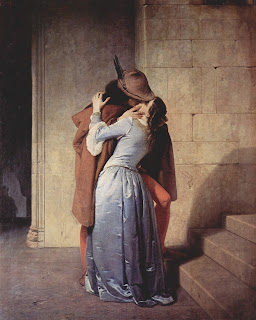 But then there's the whole idea I had about trying my hand at writing a romance, and I'm really not sure I'd want to combine the two. QUEST + ROMANCE = CHEESY. Not always, of course, but it just seems like if the point is to find the MacGuffin before the world ends or whatever, then splitting your attention to moon over some hottie is a little bit counterproductive. And I do realize the hottie can be the MacGuffin, but then it just really becomes a book about a character who is obsessed with someone else and needs to develop a stronger sense of self. Although I suppose the Myadar serial I've been working on has some elements of this--in her case it's a child, not a hottie, though. I like writing female main characters, though, and if I'm going to write a romance, I don't want my mc to be so smitten with the love interest that they pursue them like a MacGuffin. And as for a scenario where the mc of my fantasy novel dutifully pursues the (non-character) MacGuffin and falls in love with some other character who is somehow tangentially involved, while I have no problem with this sort of story, it's not really a romance. It's a fantasy story with an element of romance. And so it doesn't satisfy the "I should try writing a romance" urge.
No, I have a couple of specific needs when it comes to my mc, and these vary by genre. For one thing, if I do write a fantasy novel, I want my mc to be powerful. I often write mcs that are fairly ordinary or at least inexperienced, and as such, apt to get their butts whipped. It would be nice, for a change, to have an mc who does the butt-whipping. If I write a romance, I suppose my mc could still be a butt-whipper, (ahem--this is straying into unintended territory--keep your minds out of the gutter, people) but it's really not so essential.
There was the whole Edwardian romance idea, but I am, shall we say, a perfectionist when it comes to research, and would probably drown in any effort to write a historical romance even of the shallowest kind. I've considered possibly creating a fantasy setting that somewhat emulates the Edwardian England of Jane Austen, thereby releasing myself from the need for accuracy of depiction, but then we stray back into FANTASY + ROMANCE = CHEESY again.
Welcome to the merry-go-round that is my mind when I try to tease out a new story. :P
How about you, do you ever find yourself going around in circles when you're trying to nail down a new story?
It's always so wonderful to finish the first draft. The revisions are much less fun. Yes, yes, I know they are a necessary evil, and I'm going to do my best to nail every typo and fill every plot hole. I'm just not going to particularly enjoy it.
I've been giving a lot of thought to what to write next, and I just finished reading a GLBT fantasy novel that I'll be reviewing here soon that I absolutely loved, and it made me want to write a GLBT fantasy novel. Or maybe just a fantasy novel, with or without GLBT characters. I've got a fantasy world I spend month building many many years ago that I'd love to actually set a novel in.
Trouble is, I'm really not sure what my characters or story would be like. I have odds and ends in terms of ideas, but nothing that hangs together. I know I like an old-fashioned quest, of course.

No, I have a couple of specific needs when it comes to my mc, and these vary by genre. For one thing, if I do write a fantasy novel, I want my mc to be powerful. I often write mcs that are fairly ordinary or at least inexperienced, and as such, apt to get their butts whipped. It would be nice, for a change, to have an mc who does the butt-whipping. If I write a romance, I suppose my mc could still be a butt-whipper, (ahem--this is straying into unintended territory--keep your minds out of the gutter, people) but it's really not so essential.
There was the whole Edwardian romance idea, but I am, shall we say, a perfectionist when it comes to research, and would probably drown in any effort to write a historical romance even of the shallowest kind. I've considered possibly creating a fantasy setting that somewhat emulates the Edwardian England of Jane Austen, thereby releasing myself from the need for accuracy of depiction, but then we stray back into FANTASY + ROMANCE = CHEESY again.
Welcome to the merry-go-round that is my mind when I try to tease out a new story. :P
How about you, do you ever find yourself going around in circles when you're trying to nail down a new story?
Thursday, January 17, 2013
Wherein I Muse about Writing
Despite going back to work last week, I have managed to continue working on the current WiP, which is satisfying. Lately writing has been functioning as my escape. It's not always like that--I'm far more likely to retreat into the Sims 3, but I've had to set that aside because the game has so outpaced my poor computer's abilities that without an upgrade the game is unplayable. Which means I have to resort to writing to get away from reality--and lately reality has been giving me reason to want to get away (see my recent entries in my family blog if you want details about that).
I've set aside the decopunk serial for the moment because I wrote myself into a corner with it and I decided I need distance before tackling it again. Instead I've written about 40K words of the third novel in the Veronica Barry series. I'm still wrestling with the title. Something to do with clouds. I have a whole elemental symbolism thing going--first water, then fire, now air. Next will have something to do with earth. Maybe the fifth will have to do with spirit. Or maybe I'll switch to feng shui elements and have metal and wood. Or some combination.
So far, the novel is moving along nicely, and I've managed to bring together several elements that I'm enthusiastic about, so that's cool. My only regret is that I didn't write The River and the Roses in first person. Ever since working on the decopunk serial, which was in first person, I've decided I really prefer it. However, River, Fire and Veronica in Paris are all third person, so it doesn't make sense for this book to suddenly switch to first. Oh well!
Veronica is, by now, like an old friend, and I can see returning to her over and over to tell more stories about her. I have a lot of other plot bunnies bouncing around in my head. I really want to write a romance, for one. Maybe an Edwardian romance, since I just love Jane Austen. Plus, I sometimes get tired of the violence that necessarily comes with writing a Veronica book (other times I'm in the mood to write horror and it really works--lately that hasn't been the case, though, because I really feel like there's too much violence all around us these days). So I figure a romance would be a good genre to choose if I want to avoid writing violence.
Romance is a challenge for me. I tend to be very cynical about romance in real life, and to find a lot of fictional romances unoriginal. Then again, I almost always enjoy romantic comedies, so I suppose that's the exception. I'm not sure I have the skill to write any kind of comedy, though. I can be funny, but it's sort of this out-of-nowhere thing that happens sometimes, not something I can sustain. So I'm really not sure I could actually manage to write a romance. But it's something I'd like to try one of these days.
 I've always loved soap operas, and I've often thought it would be fun to write a series of novels, or maybe even another serialized novel, that emulates soap operas. I'm not sure how that would look, though. I mean, to really emulate soap operas, you have to be willing to go the whole hog. Baby switches, returns-from-the-dead, improbable-relative-revelations, etc. Would that work in written form? Maybe I'll give that a try one of these days. It would probably work best slightly tongue-in-cheek, but I wouldn't want to go too over the top with silliness, because then it wouldn't really be sustainable, would it?
What genres have you thought about trying out? Have you jumped in and tried one that was new to you? How did it go?
I've set aside the decopunk serial for the moment because I wrote myself into a corner with it and I decided I need distance before tackling it again. Instead I've written about 40K words of the third novel in the Veronica Barry series. I'm still wrestling with the title. Something to do with clouds. I have a whole elemental symbolism thing going--first water, then fire, now air. Next will have something to do with earth. Maybe the fifth will have to do with spirit. Or maybe I'll switch to feng shui elements and have metal and wood. Or some combination.
So far, the novel is moving along nicely, and I've managed to bring together several elements that I'm enthusiastic about, so that's cool. My only regret is that I didn't write The River and the Roses in first person. Ever since working on the decopunk serial, which was in first person, I've decided I really prefer it. However, River, Fire and Veronica in Paris are all third person, so it doesn't make sense for this book to suddenly switch to first. Oh well!
Veronica is, by now, like an old friend, and I can see returning to her over and over to tell more stories about her. I have a lot of other plot bunnies bouncing around in my head. I really want to write a romance, for one. Maybe an Edwardian romance, since I just love Jane Austen. Plus, I sometimes get tired of the violence that necessarily comes with writing a Veronica book (other times I'm in the mood to write horror and it really works--lately that hasn't been the case, though, because I really feel like there's too much violence all around us these days). So I figure a romance would be a good genre to choose if I want to avoid writing violence.
Romance is a challenge for me. I tend to be very cynical about romance in real life, and to find a lot of fictional romances unoriginal. Then again, I almost always enjoy romantic comedies, so I suppose that's the exception. I'm not sure I have the skill to write any kind of comedy, though. I can be funny, but it's sort of this out-of-nowhere thing that happens sometimes, not something I can sustain. So I'm really not sure I could actually manage to write a romance. But it's something I'd like to try one of these days.

What genres have you thought about trying out? Have you jumped in and tried one that was new to you? How did it go?
Wednesday, January 2, 2013
Review of Naamah's Blessing by Jacqueline Carey
I had hoped to be able to provide a little interview to go with this review. Alas, Ms. Carey is working towards a publishing deadline and declined my request for the interview. Oh well! Here's the review, in any case.

 Naamah's Blessing, by Jacqueline Carey, is the third book
in the Naamah trilogy and the last of the Kushiel's Legacy
novels. For me, this latter fact is very hard to accept. Like
many, many readers, I have loved Terre D'Ange and the elegant
prose of the novels Carey has set there, waiting anxiously for
the next installment.
Naamah's Blessing, by Jacqueline Carey, is the third book
in the Naamah trilogy and the last of the Kushiel's Legacy
novels. For me, this latter fact is very hard to accept. Like
many, many readers, I have loved Terre D'Ange and the elegant
prose of the novels Carey has set there, waiting anxiously for
the next installment.
The Naamah trilogy takes place several generations after Phedre and Imriel's stories, and this, at first, discouraged me. I loved them both so much! But I came to love Moirin as well, the "jade-eyed witch" who narrates the Naamah novels. Moirin, half-D'Angeline, half-Maghuin Dhonn, travels the world following the spark of her soul, and getting into a lot of trouble as she does. In Naamah's Blessing, Moirin finds that despite her many adventures, her greatest challenge lies ahead of her, and she must travel to the equivalent of the Aztec empire. Carey soon connects the challenges of this new setting to mistakes Moirin made in the first novel, Naamah's Kiss ,
pleasingly closing the circle of the plot.
,
pleasingly closing the circle of the plot.
I have always found that Carey's Terre D'Ange novels tap into my personal tastes--often right at a point in my life when I've been thinking about just the sorts of things her stories happen to address (for instance, I was seriously considering adopting a child at about the time I picked up Kushiel's Avatar ).
The Naamah trilogy was no exception. That said, I did pick up on
a sense of fatigue in Naamah's Blessing. Perhaps it was
because I knew it was the last one--perhaps had I not known
that, I wouldn't have gotten that sense at all. However, Moirin
herself has had enough of adventures by the time she reaches the
Terra Nova, and she seems to really only want one thing: to
settle into a monogamous marriage with Bao, so they can start
having plump babies. I can't fault her for that; in my
experience, a loving marriage and a plump baby are the keys to
heaven on earth. Still, I think the novel lacked drive; it was
certainly compelling, and a good end to the series, but it was
no Kushiel's Dart
).
The Naamah trilogy was no exception. That said, I did pick up on
a sense of fatigue in Naamah's Blessing. Perhaps it was
because I knew it was the last one--perhaps had I not known
that, I wouldn't have gotten that sense at all. However, Moirin
herself has had enough of adventures by the time she reaches the
Terra Nova, and she seems to really only want one thing: to
settle into a monogamous marriage with Bao, so they can start
having plump babies. I can't fault her for that; in my
experience, a loving marriage and a plump baby are the keys to
heaven on earth. Still, I think the novel lacked drive; it was
certainly compelling, and a good end to the series, but it was
no Kushiel's Dart .
.
I do have to say that I admire Carey's handling of the Aztecs and Incas. Some reviewers on Amazon complain that the portrayals were too flat or stereotypical--I didn't think so. Sure, I would have loved more description, for the novel to delve even more deeply into their culture. Perhaps this is one was in which it communicated fatigue. However, thinking back to the discussion some months ago on this blog about orientalism, I have to say that Carey sidestepped that pitfall very gracefully. [Spoilers ahead.] The characters travel to a strange, intimidating place, but it is not the Aztecs or the Incas who are sinister and evil. It is a D'Angeline, wielding power he attained through a demon Carey created and he accessed while still in Terre D'Ange. Yes, his weapons are the fearsome fire ants of the Amazon, but it is his evil that drives them. The Aztec and Inca characters themselves are multidimensional, believable, and range from honorable and brave to treacherous and villainous. This confirms my earlier realization about writing adventure stories: the big bad needs to be from off-world or a complete creation of the author's, in order to avoid any taint of exoticization and the like. This was quite effectively handled in Naamah's Blessing.

I absolutely recommend this novel, but if you haven't read Kushiel's
Dart, start there. And give it about 330 pages before you
make up your mind--there's a pretty sweet plot point that really
throws the reader for a loop--one I very much enjoyed.
Naamah's Blessing, by Jacqueline Carey, is the third book
in the Naamah trilogy and the last of the Kushiel's Legacy
novels. For me, this latter fact is very hard to accept. Like
many, many readers, I have loved Terre D'Ange and the elegant
prose of the novels Carey has set there, waiting anxiously for
the next installment.The Naamah trilogy takes place several generations after Phedre and Imriel's stories, and this, at first, discouraged me. I loved them both so much! But I came to love Moirin as well, the "jade-eyed witch" who narrates the Naamah novels. Moirin, half-D'Angeline, half-Maghuin Dhonn, travels the world following the spark of her soul, and getting into a lot of trouble as she does. In Naamah's Blessing, Moirin finds that despite her many adventures, her greatest challenge lies ahead of her, and she must travel to the equivalent of the Aztec empire. Carey soon connects the challenges of this new setting to mistakes Moirin made in the first novel, Naamah's Kiss
,
pleasingly closing the circle of the plot. I have always found that Carey's Terre D'Ange novels tap into my personal tastes--often right at a point in my life when I've been thinking about just the sorts of things her stories happen to address (for instance, I was seriously considering adopting a child at about the time I picked up Kushiel's Avatar
).
The Naamah trilogy was no exception. That said, I did pick up on
a sense of fatigue in Naamah's Blessing. Perhaps it was
because I knew it was the last one--perhaps had I not known
that, I wouldn't have gotten that sense at all. However, Moirin
herself has had enough of adventures by the time she reaches the
Terra Nova, and she seems to really only want one thing: to
settle into a monogamous marriage with Bao, so they can start
having plump babies. I can't fault her for that; in my
experience, a loving marriage and a plump baby are the keys to
heaven on earth. Still, I think the novel lacked drive; it was
certainly compelling, and a good end to the series, but it was
no Kushiel's Dart.I do have to say that I admire Carey's handling of the Aztecs and Incas. Some reviewers on Amazon complain that the portrayals were too flat or stereotypical--I didn't think so. Sure, I would have loved more description, for the novel to delve even more deeply into their culture. Perhaps this is one was in which it communicated fatigue. However, thinking back to the discussion some months ago on this blog about orientalism, I have to say that Carey sidestepped that pitfall very gracefully. [Spoilers ahead.] The characters travel to a strange, intimidating place, but it is not the Aztecs or the Incas who are sinister and evil. It is a D'Angeline, wielding power he attained through a demon Carey created and he accessed while still in Terre D'Ange. Yes, his weapons are the fearsome fire ants of the Amazon, but it is his evil that drives them. The Aztec and Inca characters themselves are multidimensional, believable, and range from honorable and brave to treacherous and villainous. This confirms my earlier realization about writing adventure stories: the big bad needs to be from off-world or a complete creation of the author's, in order to avoid any taint of exoticization and the like. This was quite effectively handled in Naamah's Blessing.
I absolutely recommend this novel, but if you haven't read Kushiel's
Dart, start there. And give it about 330 pages before you
make up your mind--there's a pretty sweet plot point that really
throws the reader for a loop--one I very much enjoyed.
Thursday, August 2, 2012
Free book! Come and get it!

Thursday, May 31, 2012
Pen Names: Good Idea or Bad?
I've been toying with the idea of creating different pen names for different genres of stories I write (or intend to write). It seems like it might function as a way to keep things organized. I'm the type of person who has folders and subfolders for organizing email or documents on my computer. And yet, in real life, I'm pretty messy. Go figure.
There are my Veronica books, and I'd probably include Broken Ones in the same genre. Modern day, involves ghosts. Those have been around for a year, with "Sophia Martin" as the author name.
Then there's The City Darkens, my current WiP, which is a serialized novel and in the genre of decopunk, sci fi/fantasy. So... I could put my same name on it, or something like S. D. Martin, or M. R. Tinn (= Martin, get it?) or something else. The idea isn't to disguise who I am at all. I'll be posting all about the book here and putting it in the margin with the other books, etc.
And I've been thinking about writing some Georgian or Victorian romances, because there just aren't enough Jane Austen novels, you know? I love them. A lot of people love them. So why not attempt to approach the brilliance of Austen--ha! good luck, Sophia--or at least capture some of what makes those stories so wonderful? Anyway, it seems incongruous for Sophia Martin to write ghost stories, sci fi, and Georgian romances. So some other pen name for that.
The problem is, would using pen names destroy any value my platform on Twitter, Facebook, etc. provides to Sophia Martin? Ultimately, I'm not really convinced those do all that much for my book sales anyway, but what do you think about it? If I'm not going to hide that all the pen names are one person, does that make a difference? Do you think using pen names would be useful or frivolous?
I'm really curious. I hope you'll comment.
There are my Veronica books, and I'd probably include Broken Ones in the same genre. Modern day, involves ghosts. Those have been around for a year, with "Sophia Martin" as the author name.
 |
| As a writer, you wear many hats. :) |
Then there's The City Darkens, my current WiP, which is a serialized novel and in the genre of decopunk, sci fi/fantasy. So... I could put my same name on it, or something like S. D. Martin, or M. R. Tinn (= Martin, get it?) or something else. The idea isn't to disguise who I am at all. I'll be posting all about the book here and putting it in the margin with the other books, etc.
And I've been thinking about writing some Georgian or Victorian romances, because there just aren't enough Jane Austen novels, you know? I love them. A lot of people love them. So why not attempt to approach the brilliance of Austen--ha! good luck, Sophia--or at least capture some of what makes those stories so wonderful? Anyway, it seems incongruous for Sophia Martin to write ghost stories, sci fi, and Georgian romances. So some other pen name for that.
The problem is, would using pen names destroy any value my platform on Twitter, Facebook, etc. provides to Sophia Martin? Ultimately, I'm not really convinced those do all that much for my book sales anyway, but what do you think about it? If I'm not going to hide that all the pen names are one person, does that make a difference? Do you think using pen names would be useful or frivolous?
I'm really curious. I hope you'll comment.
Tuesday, April 26, 2011
Book Review: Secret Storm by Amelia James

 .
.Sara and Jack have a strong attraction, but for years they’ve never found each other at the right time. Finally they are both single—but secrets in Jack’s past may ruin their love before it can bloom.
I started reading this novel on Saturday and finished it on Sunday. It was an entertaining read. As an erotic romance, Secret Storm certainly delivers. It’s a sexy story, and the descriptions of sex are well done.
I do have some concerns:
From the perspective of someone who has worked with survivors of domestic violence, Jack’s behavior threw up some red flags—I think the author ultimately handled it so that I was not left feeling uncomfortable, but it’s worth mentioning.
I understand the need to draw out the satisfaction of finding out what Jack’s secret is, but I think this became artificial after a while—more external obstacles would have helped, although when he finally decides to tell Sara, an external obstacle does come up, and it seems too much by then. Also, the scene from his past is awkward—better choreography would have justified the events in a more believable way.
However, these are small parts of the story and overall I enjoyed this novel a lot. I found the characters likable and I wanted to see them overcome their challenges. The recurring imagery of storms added a poetry that I appreciated.
I would recommend this novel to any mature reader who enjoys erotic romance.
Subscribe to:
Posts (Atom)