Friday, December 20, 2013

There Comes a Prophet, by David Litwack

I have mixed feelings about this novel. On the one hand, I enjoyed the writing stylistically. This novel was published by a small publisher, though, so one can expect it to be edited and free from errors. There were some errors, however, though not enough to bother me, and I can be picky. On the other hand, much about it was disappointing.

::SPOILERS::

Plot Summary: A thousand years ago the Temple of Light took over, banning everything that would remind people of the time before (our time, plus perhaps some more advances in technology). The people live as they did in the olden days (I purposefully use a vague term here; the descriptions were lacking) with people who work as weavers and shoemakers. In order to enforce their power and the rejection of what they call the Darkness, the Temple periodically takes a youth and gives them a "teaching;" which amounts to psychological torture lasting several weeks. When the youth's spirit is broken, they return them to their village to be an example to the rest. Which actually sounds a lot harsher and scarier put like that that it actually was in the novel, but I'm getting ahead of myself. Anyway, the three main characters, Orah, Thomas, and Nathaniel, are all around the age of teaching, and Thomas gets chosen. When he returns he's in bad shape, so when Orah gets chosen next, Nathaniel decides to go after her.


The problem I have with the novel is that it was lackluster. There's only one part that really held my attention, and that was in the first third when Orah is taken and Nathaniel goes to save her. That was compelling. Otherwise, this novel really illustrates the need for authors to put their characters in dire situations that seem impossible to escape. Most of the time in this novel, that was not the case. Thomas's teaching, while certainly a sucky experience, was hard for me to really imagine as soul-crushing. They have him in a solitary cell. It's dark. Occasionally they show him images of  nuclear weapons going off, so he learns what the Darkness was all about. Yes, this is a nasty experience, especially for a nice kid who's been raised in a small village where the worst thing that happened was probably a bad winter. But not having experienced solitary confinement myself, I have little understanding of what it does to your mind. Perhaps if the author had gone further in his descriptions... I don't know. You're repeated reassured that no physical harm will come to the character. You know that the period of teaching will end and he'll get to go home. It's just not dire enough.

Even when the characters went to find the Keep, and it looked like the clever arch bishop might be tracking them, they handily get rid of the tracker. No tension there anymore. They find the Keep and spend a leisurely summer looking up things like mathematics. Not exactly nail-biting stuff. Litwack hinted that Thomas might betray his friends, and in the end he sort of does, but only by denying he wanted to go to the Keep with them. I thought he was going to do something far more drastic, like call the vicars. Then it would have been fascinating to see him struggle with what he'd done and all that. So things just never reach any sort of a real peak. It seemed to me that the novel was a platform for the author's views, which many novels are. That doesn't have to be a bad thing, but that's kind of *all* this novel was, in my experience.

As for the characters, they were not developed enough. Each of the main characters only had two or three qualities that defined them, and most of the time the author just told you what they were without going into detail. Nathaniel's a dreamer. He used to dream about knights. He's brave. Orah's the planner. She's also a leader. Thomas used to be the sweet musician, then after his teaching he's the scared sweet musician. He likes food and is good at climbing. Any secondary characters get next to no detail at all. To be fully developed and interesting, characters need a lot more going on. I was really interested when the author started to describe Orah's life as a weaver. I wish there had been a lot more of that. It might have made me care about her more. But more than that, none of them seemed to have real dreams. Nathaniel wants to... explore the mountain pass? That's his big dream? Be a knight, I guess. Although that's implied more than shown. Orah wants...? Nathaniel, eventually, I guess. But not much else. Why does she even care about the Keep? Is it because she got chosen for a teaching and wants to bring the Temple down out of... revenge?

No--such an emotion is too dark and extreme for the characters in this book. They are just nice kids who stumble onto a puzzle and walk a really long time, then get exposed to some education that opens their minds to possibilities. It's not enough to warrant the revolution they decide to bring on. It just isn't. Nobody ever went to war because they thought the populace needed to know that a thousand years ago people were capable of star travel. People become revolutionaries when their children are starving to death.*

So as much as I'd like to rate this novel higher because I appreciate stylistically good writing, I just can't. I hope in his future writing David Litwack raises the stakes and pushes the limits of how far he'll take his characters. It doesn't have to be as brutal as The Hunger Games, but make me believe they're really in danger! :)

__________
*Or when the British overtax them and restrict their "right" to take land from Native Americans. But that was sort of an anomaly, as revolutions go.

Wednesday, December 4, 2013

World Building! Huzzah!

I confess, I'm letting my attention wander off my WiPs at the moment. It shouldn't come as a surprise given that I wrote a whole post about my current writing ennui, of course. But what has been fun is that instead of wasting all my time on The Sims (did you know that The Sims 4 is coming out in a few months? This could be bad news for my writing!), I actually have gotten involved in some world-building. I've had several flickers of inspiration for a possible new series, though I won't say more than that because it's not even half-formed in my mind yet. The world I'm working on will include Odalnord, the land of Myadar and The City Darkens, but it will also possibly be the setting for this new story. I'm toying with a medieval setting and I've been using some pretty fun online utilities to create a land in this world that adheres to some realistic aspects of a medieval European setting. It's still very much in the preliminary stages, but I spent a couple of hours last night working on a map and figuring out where the climate zones would be.

The utilities I have been using are intended for role-playing games a la Dungeons & Dragons, but of course can be used for fictional worlds in novels, too:

This link provides a list of Mapping software, some free, some not. I used "Fractal Mapper" to create my map.

This one is a "domesday book"-- doomsday books (that's the spelling I'm more familiar with) were essentially censuses (censi?) of medieval communities, and historians get very excited about them nowadays. This site allows you to set a couple of parameters and it then gives you calculations for how many cities, towns, etc., and how many professions in a town or village as you choose, would exist in your kingdom.

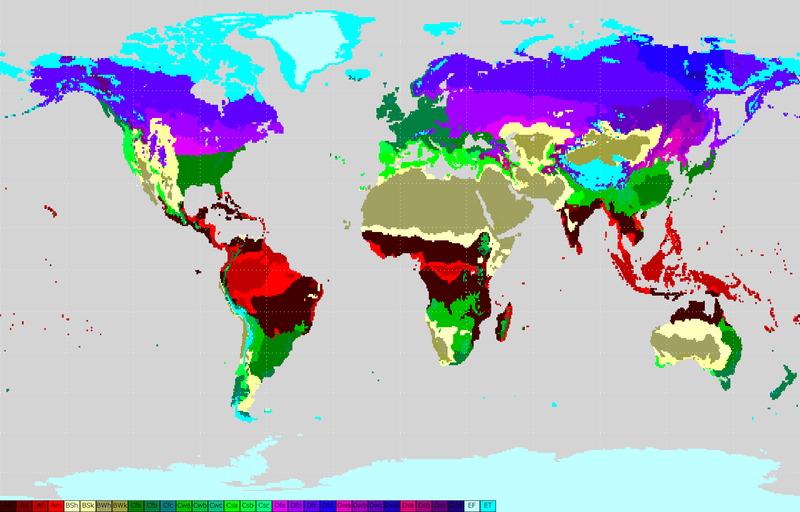
I also just looked at a climate map of Earth and followed the latitudes and other patterns (Oceanic climates on west coasts, for instance) to work with my fantasy world map. I'm probably not going to get it 100% right but it's fun to have a guide. It opens up story possibilities just knowing what the climates are, and, paired with the domesday book site, it makes a difference as to which areas are more densely populated and have cities and such.

Another aspect of the domesday book site that's fun to think about is the history of the land and how long people have been building castles there. That impacts how many castle ruins there are, and castle ruins just provoke all sorts of interesting ideas in terms of adventures that could happen there. What terrible hauntings could be taking place in some castle ruins near the town my character might live in??? Mwahahaha.

Anyway, it's not techinically writing, but it's not so far afield that I feel like I'm abandoning writing completely. And as long as that's where my energy is flowing, I'm going to go with it.

Do you enjoy world-building? How much detail do you like to put into it? Do you have any cool utilities that you use? Recommend them in the comments, I'd love to check them out!

Friday, November 22, 2013

When You Don't Feel Like Writing

First of all, let me say that I do not subscribe to the school of thought that would address this problem with a simplistic, "You write anyway!" exclamation. Writing is not boot camp. Toughing it out may work sometimes, in certain situations. For instance, about a week ago because I'm doing NaNoWriMo I did force myself to write on a day when I felt really stuck, and I did break through the wall I was banging my head against, and so it really was worth it to endure the discomfort of that. But I'm not really talking about that sort of situation here.

What I'm talking about is an overall feeling of blah, I'd rather be <insert other hobby here> that I have sometimes. Generally, I find my writing happens in cycles, and may be tied to seasons. For the last few years, I've had writing frenzies, in which I must write or feel like I'm losing my marbles, mostly in March through May. And I've also always really wanted to do NaNo, ever since discovering it in 2006. I haven't been able to do it every year since then, but in the years that I didn't, I really missed it.

This is the first year that I can do it, I am doing it, and I'm really not into doing it.

I'm not sure why. The story is working. I'm pleased to be back in Veronica's world--in other words, she's not the problem. I can only chalk it up to how hard the summer was. I think I went through a minor depression, and I think I'm not really out of it completely. I've gone through a major depression in the past and this is not like that, but one thing the two do have in common is I have no desire to write.

Now, I have been under the impression in the past that not writing leads me to feel bad, and sends me in the direction of depression. So you'd think doing NaNo would help me get out of this minor depression, but it doesn't seem to be doing that.

Another possibility is that my writing has been taking a darker turn lately. The sequel to The City Darkens (as yet untitled, but technically Luka's Chosen, book 2), is kind of a study in how to write about violence without making it titillating. The fourth Veronica novel, which will probably be called The Cradle and the Grave, although I've been considering reversing the order, has a lot of really dark moments. Which I don't think is entirely out of the ordinary for the series, but I just got through writing some of the darkest scenes, and that's been draining.

Still another option has to do with how my writing happens in general. I go through periods when I don't want to write. Like usually in the summer, despite having more time to do it, I don't write a lot. Summer is for playing outdoors. I actually did try to write quite a bit this summer and eventually gave up as I went into my shell. So it could be that rather than dragging along the vestiges of my minor depression this not wanting to write is really happening because I'm just not in the mood, and I will be in the mood in a couple months. It wouldn't be the first time.
Because, kittens.

So I think when I hit 50K for NaNo I'm stopping for a while. If I do, I'll have two WiPs sitting around at 50K words. Which is uncomfortable. I can't help worrying about them. It's unlikely I'll abandon them so far in, but it does mean I'll have to reread them and scratch my head a bit when I pick them back up to continue with the story. So I don't know. Maybe I'll only take a few days off and then get back into one or the other.

How about you? Do you ever take breaks from writing or producing whatever art or craft you're passionate about? Do you think it's best to always force yourself to keep going?

Thursday, October 31, 2013

The Conundrum of Ender's Game

Anyone who is interested in sci fi and LGBT issues, and has access to the internet, has probably already heard about the boycott against Ender's Game, the movie based on the novel by Orson Scott Card, opening tonight. A lot of people are very excited for the movie. As I understand it, the novel is very good. My ex-husband certainly liked it a lot. I have never read it, but I do know a little about it from what he told me.

All things being equal, I love sci fi and often wish there were more shows and movies out there to see. So I would have been happy to go see Ender's Game. However, there's a problem. Orson Scott Card is not only a vocal opponent of LGBTQA rights, but he puts his money where his mouth is. So essentially, paying to see Ender's Game means making a contribution to a vehement homophobe's campaign to keep gay marriage illegal and even criminalize homosexuality. Of course, now that his novel is being made into a film and the world has started to discuss his views and actions, Card is claiming he's backing off. He's demanding that everyone show tolerance for his past statements and actions. Which is like Napoleon asking everyone to forget he once took over most of Europe after he was sent to Elba.*

So, okay, Card is a tool and a bigot. Let's all boycott the film.

Except as was recently pointed out to me on  Goodreads forum, Lionsgate, the company producing Ender's Game, has a history of positive policies towards their LGBTQA employees.They've issued a statement, unsurprisingly, in hopes of stopping the boycott before it starts. So paying to see Ender's Game means supporting a company that has publicly declared itself an ally of the LGBT community and apparently puts its money where its mouth is. So the decision is a bit more complicated.

I need to say one or two things about boycotts in general.

First of all, calling for a boycott of a product or service is not the same thing as calling for censorship. I have seen way too many people on the internet in the last few months conflating those two actions. No one who wants to boycott Ender's Game is also automatically saying Card should be silenced, his books should be burned, or anything else that would fall under the purview of censorship. Censorship is about restricting someone's freedom. A boycott is about using one's freedom to choose where one will spend money. In boycotting Ender's Game, people are saying, "Sure, Card, keep doing what you're doing, that's your right. It's also my right to ignore you and refuse to give you money."

Secondly, there's something to be said for participating in a large-scale boycott because it sends a message, even if it seems to be picking on just one person. I've heard before that there's no point in individuals boycotting items without it being part of a larger boycott, because only a large, organized boycott will make a splash. I, for one, boycott Walmart (for so many reasons I will not go into here; watch this movie if you're curious) despite the fact that my boycott is indefinite and doesn't have to do with a larger organized effort. I will continue to do so even though Walmart probably won't ever notice, because I could not live with myself if I shopped at a place with so many awful policies. There are other businesses and individuals I boycott, but I won't list them all here. The point is, I believe in boycotting, on a personal level and as part of a larger effort. And the larger efforts may actually bear fruit, which is why boycotting Ender's Game may be worth it despite Lionsgate's good policies.

Another thing to consider is the long view: if Ender's Game does well at the box office, Card's chances of scoring more movie deals go up. Do we really want to funnel millions of dollars into this man's pockets?

I am sad I'll miss out on what I'm told will be a really good sci fi movie. But to quote MLK, "Human progress is neither automatic nor inevitable... Every step toward the goal of justice requires sacrifice, suffering, and struggle; the tireless exertions and passionate concern of dedicated individuals." I realize it's just a movie. Seems a little dramatic to quote King. It's just that I so rarely want to see movies that come out these days, and it's such a pleasure to do so. So it is a sacrifice. And a worthy one--I am committed to opposing forces that would deny rights and dignity to people anywhere. So no Ender's Game for me.

Were you planning on seeing Ender's Game? Have you changed your mind? Tell me your take on all of this.

______________________
* It's important to note that Napoleon later escaped from Elba and went on to lead an army again. Need I explain the implication I'm making in reference to Card?

Wednesday, October 23, 2013

Hello People Who Haven't Quite Given Up on this Blog

Yes, I've been totally MIA blog-wise since June. What can I say, it was a rough summer with little or no writing and fall wasn't much better. There were family issues, there was a move... nothing all that interesting though it effectively brought my blogging and fiction writing to a grinding halt nevertheless. I'm going to reformat The City Darkens today for release as a full novel (no more serialization--I've decided that since no one seemed to think that was as fun as I did, I'm done with it), and I have a new cover (queue excited clapping) done by professional artist Dolly Georgieva-Gode. You get to see it here first:


Also, if you read one or more of the installments of The City Darkens, like the first one, Myadar's Snare, for instance, please comment below with your email and I'll send you a complimentary copy of the full novel. I'll be formatting it so you can skip forward to whichever section you choose, so you don't have to reread the first parts if you don't want to. I would, of course, deeply appreciate your giving the book an honest review on Amazon, Barnes & Noble, and Goodreads.

Wondering if you'd like the book and what it's about?

Here's the blurb:
For ten years Myadar has accepted her life as the estranged wife of a nobleman, running his estate and raising their young son. Everything changes when Myadar is summoned to the capital to begin a new life as a courtier in the decadent, scheming royal court. In a land on the cusp of a new age of modernity, Myadar must decide whether to oppose the rising tyranny that threatens to destroy everything she loves, and risk her own life in doing so.

And here are links to the Goodreads pages of the first three installments from back when it was a serial. You can read reviews there.

Myadar's Snare
Myadar's Betrayal
Myadar's Flight

Wednesday, June 5, 2013

Wrangling Fictional Characters

I've begun to write the sequel to The City Darkens, and I won't say very much about that specifically, since it is one my rules never to talk about a story before it's finished. But what I will say is that I decided to go with a different narrator than Myadar. Ginna has lived most of her life in the Undergrunnsby--I felt like Myadar's story really only showed one perspective on the city, and that I needed to have the next story flip that and look at it from a completely different angle. So this has presented two unexpected challenges.

First, Ginna has a distinct voice, which is great, in a distinct dialect, which I can hear clearly in my head most of the time. At first, I had a real struggle because Ginna kept insisting on switching tenses and telling her story sometimes in present tense and sometimes in past tense. Eventually I figured out how to handle this: she'd tell the events of the story in past tense, and anything she considered to be a constant truth she'd tell in present tense. Now the only trouble I'm having is with some of her to-be verbs, which I can't seem to find a consistent way of conjugating. I'm going to have to study up on existing dialects. The nice thing about creating your own fantasy world is that you can take liberties when you invent a dialect. You're not required to represent how real people talk in a certain region of the real world. But you do have to be consistent.

The second unexpected challenge is that Ginna is such a strong personality right from the get-go. I feel like she's just using me to get her story out. (Stephen King attributed an idea to Native Americans--I don't think he was specific about the tribe and I don't remember where I read this--that stories stalk the writer until the writer is ready to tell them, or some such. It's like that.) Actually, a few times it's been like she slapped me upside the head and said, "Hey! What kind of ninny do you think I am? I'm doing this instead." And sometimes I don't really like what she does, but there's no way around it. She's going to do things that way, because that's who she is. For one thing she can be incredibly and remorselessly violent. Not all of the time, but basically she's got a lot of rage from some of the experiences she's been through. I've written before about violence, and how ambivalent I am about representing it in fiction. I look at George R. R. Martin's stories, which granted I've only experienced through the show, Game of Thrones, and I think he goes too far. Don't get me wrong, I'm addicted to the show. But I really could do without some of the images it has put in my head, and it disturbs me when people come to the defense of its violence with reasons like, "It's historically accurate." Westeros doesn't exist, people. It never did. There can be no historical accuracy there. And if you're referring to a depiction of medieval England, let me tell you that the ways in which GoT is historically inaccurate far outweigh the ways in which is may be accurate--for instance, there's no Catholic Church, and you really can't talk about the history of England without including the Catholic Church.

Not exactly a Catholic priest.
Okay, end history-nerd side rant.

Anyway, the point I was actually trying to get to is that since I've begun dealing with Ginna, it's caused me to wonder if GRRM might actually not have really planned to be quite so brutal when he started writing. Maybe his characters slapped him upside the head and said, "HEY. WE ARE JUST THAT EVIL." Or something. Then again, one of the people I watch GoT with claims that when GRRM was a kid, he had pet turtles, and used to write stories about the turtles torturing each other and plotting to murder each other. So quite possibly he's just that much of a sadist. Who knows?

I'm actually not complaining about Ginna's domination over the story. It's quite wonderful when characters take over and the story grows from them. I'm a pantser, though. I can see how if you had a whole outline written, characters slapping you upside the head and demanding that the story go in a direction you never intended might become a problem. You'd get quite lost without your map.

Have you ever experienced a character running loose from your control? What was that like for you? Did you enjoy it, or were they a royal pain in the ass? How did that story turn out?

Wednesday, May 29, 2013

Vanguard of Hope, by Kathy Steinemann

Vanguard of Hope, by Kathy Steinemann, the first in her Sapphire Brigade series, is a melodrama set in the late 19th century. I have had quite an internal struggle over how to rate this book. Because I determined that several of the problems I had with it were probably personal taste issues, I'm giving it three stars instead of two.

One thing that Steinemann could easily clarify at the beginning with a quick edit is the location of the story. I was very confused--there were references to "Free Negroes" and the 13th Amendment, implying the United States, most likely in the South. But the spellings are often British, there is a reference to British tutors, and Peter, the husband, is described (too far in) as having a British accent.

There are also some other editing issues like verb tense inconsistencies and confusing shifts in focus from crucial plot points to details about a secondary character's appearance and personality.

But now, on to the major issues I had with the novel...

[Warning: Spoilers abound in the next few paragraphs]

First off, Steinemann sent me the book to review, and she probably didn't realize I am a historian, or she might not have. There were a few distinct, well-researched passages, but the book had so many anachronisms as to completely throw me out of the story. Finally I decided to pretend that it was set in 1958 instead of 1890, which took care of almost all of the problems. For one thing, the term "paedophile" was not in common use until the 20th century. I am not convinced that people in the 1890s would have reacted to Hope's confession about her secret as they did. Perhaps one or two exceptionally advanced thinkers might, but the vast majority would have labeled her "hysterical" and locked her away in a room with yellow wallpaper.

The concept of "racism" as a bad thing is also far more recent than the turn of the century. At that time and well into the first half of the 20th century "racism," and specifically "scientific racism," was widely accepted as an appropriate world view, not as something to condemn. Read some of Teddy Roosevelt's writings on the topic of race sometime. By the mid 1920s literally millions of people, including a half a million women, belonged to the KKK. It became something you had to do in order to make it in a career--even Harry Truman joined for a brief time. Had the novel been set in the late 1950s or in the 1960s, after the Civil Rights movement had begun, it would make a lot more sense to me that Hope would want to reject racism. And it would still make a lot of sense to me that she and those around her might suffer retaliation for it.

Terms like "cheating" and "stalking" are also later 20th century terms, for what it's worth. The book is full of language inappropriate to the time.

Another issue I had was that I thought I was reading a romance, and as romances go, Vanguard doesn't follow the rules. Some readers may enjoy this as a step away from convention. However, I like romance conventions. Introduce the main love interest at the beginning and that's who I want the main character to end up with. But Hope had not one, not two, but three loves. Hey, I'm all for polyamorous love stories, but this really wasn't one of those (way too much talk of offending God for that). The introduction of Owen in the last third of the novel really threw me off. I never trusted him. It didn't help that he kept breaking into her house and surprising her when he 1) knew she was a victim of sexual assault and 2) was a doctor who counseled her sister about her own assault and should have been a lot more sensitive to the repercussions of violating Hope's space and safety like that. On top of that, Hope's reactions to this violation didn't ring true for me. She wasn't the least bit unnerved. Maybe if she had met Owen before Solomon or Peter, if there had been established sexual tension with him from the start, I might have been able to hang in there. And it didn't help that I found their playful sexual banter awkward (they had names for their body parts) and tiresome (there was far too much of it).

Click on the image to purchase on Amazon.
I was disappointed because in the beginning of the novel I got hooked despite the anachronisms and minor editing problems, which is saying a lot for me. I get frustrated with that sort of thing usually. But I was impressed because the story of Hope's affair with Solomon was compelling and I thought that would be the focus of the book. Also, Steinemann has a good grasp of how to throw twists into a plot. In fact, I think she does it too much (he was murdered, no, he killed himself, no, he's not actually dead--that one annoyed me particularly because I was invested in the hate crime aspect of the murder scenario). But by the last third of the novel, I felt that the tension just wasn't there. The only looming threat was Hope's illness, and that wasn't enough for me. I needed something else to threaten her--the illness was just saddening, not exciting.

Anyway, I think others may enjoy this novel more than I did. Anachronisms really bug me (unless it's an alternative history) and I don't think they bother non-history buffs nearly as much. So if you like melodramas with lots of twists and prefer romances that stray from the usual conventions, you may enjoy Vanguard of Hope.